
Every movement eventually gets asked to give up. Not by its enemies, who ask from the start and are ignored, but by its own people, after enough years have passed that the asking sounds like wisdom rather than defeat.
Animal advocacy is being asked now, and not quietly. People with standing in the movement, people who have organised, been arrested, run campaigns and raised money for animals, are saying in writing that the movement should stop trying to end factory farming. Not pause. Not sequence welfare first and abolition later. Stop, permanently, and redirect the movement’s talent and funding into engineering the inside of the factory farm: better sheds, better drugs, better genetics, animals bred to suffer less inside a system that is treated as a fixed feature of the world. The argument comes with funding calls attached and with some of the movement’s most credentialed institutions behind it. And it carries a question embedded in it that almost nobody stops to examine, because the framing is designed so that you never have to.
Is it acceptable for a social movement to abandon its core goal because its members have stopped believing the goal can be reached?
Not to change tactics. Not to lower its expectations for the coming decade. Not to focus on a sub-goal as a stepping stone. To set down the thing the movement exists to achieve, because we have lost hope that we will ever achieve it.
The wrong question
The case for setting the goal down usually arrives as a question about odds. What is the realistic probability that we end factory farming? Put the number next to the cost, do the arithmetic, and act like adults about the result.
That sounds rigorous. It is not, because it treats the outcome as a fact about the world that exists independently of the people asking, like next week’s weather. Three things are wrong with that, and they need to be taken together.
The first is that the thing being forecast is not a physical fact, but a social permission. Factory farming exists as a set of laws, subsidies, certifications and norms that say this is allowed. No law of physics fixed the date Colombia’s cockfights became illegal, or the date Korea’s bear farms closed. Permissions of that kind exist for exactly as long as enough people keep treating them as existing. The outcome is made of collective belief and collective decision all the way down, so a forecast about it is a forecast about what people with free will decide.
The second is that you are one of those people. Whether factory farming is seriously contested over the next twenty years is not decided by the market. It is decided by the choices of a few thousand advocates, funders, researchers, lawyers, founders and organisers about where their working lives go, and anyone asking the question is one of them.
There is a long argument in decision theory, running from Spohn and Levi to their critics, about whether an agent can coherently assign a probability to an action while deciding whether to take it. The strong version, that “deliberation crowds out prediction”, is contested. The weak version is enough and is uncontroversial: to the extent an outcome runs through your own choices, asking “how likely is it?” is partly a way of not asking “will I do it?” You cannot fully forecast a future you are still deciding.
That covers your own contribution. It does not, on its own, cover everyone else’s, and the sceptic will say so: I can still forecast what the other few thousand will do. Which brings us to the third point.
The third is that the forecast changes what it forecasts. Robert Merton coined the term self-fulfilling prophecy in 1948 and illustrated it with a run on a solvent bank. Economists later formalised it: in the standard model of bank runs, if depositors expect others to withdraw, withdrawing becomes the rational move, and which of the two equilibria you land in can turn on a rumour rather than on anything inherent about the bank’s condition. Machine learning rediscovered the problem in 2020 and named it performative prediction: a prediction that informs decisions influences the outcome it is trying to predict. A movement is a bank whose deposits are its members’ effort. A forecast of failure, circulated among the depositors by people they trust, is not a neutral reading of the odds. It is a withdrawal, and it starts the run. So a forecast about “everyone else” is not neutral either. Publishing it is one of the things that determines it.
Now look at what the evidence says about how goals like this one get won. Chenoweth and Stephan’s study of 323 resistance campaigns across a century found that the decisive variable was participation, and that within their dataset no campaign that mobilised 3.5% of the population at its peak had failed. Set the number aside, Chenoweth herself has since documented exceptions and warned against treating it as a target. The structure is the point. Past a threshold of sustained effort, the outcome stops looking probabilistic and starts looking like a step. And the research on collective action, which I return to below, shows that effort runs on the belief that effort can succeed.
So the chain is: belief sustains work, work produces participation, participation past a threshold produces the outcome. There is no link in that chain where an external probability enters. The only real uncertainty is at the first link, and the first link is us.
None of this is wishful thinking. It is not a claim that believing something makes it automatically true. Belief alone does not determine the outcome. Work does, and belief is what sustains work. For outcomes that do not run through anyone’s choices, keep your probability estimates. This one runs through ours almost entirely.
So the useful question is not “what are the odds this wins?”, which is a spectator’s question, but “what does winning require of us, and will we do it?”
What wanting without expecting does to a person
The usual defence of abandoning the goal goes like this: I still want animal liberation, I just rate it unlikely, so I am directing my effort where it can do good. This sounds like a third position between commitment and surrender. It is not, and the reason is a fact about how human motivation works.
The standard model of motivation, from Atkinson through Eccles and Wigfield, treats what a person does as a product of how much they value an outcome and how much they expect it. Atkinson wrote it as a multiplication. Later work found the two terms interact rather than simply multiply, but the practical shape is the same: when expectancy collapses, effort collapses with it, however high the value stays. A person who values an outcome enormously and expects it at near zero produces very little, and in behaviour is hard to distinguish from someone who never valued the outcome at all.
This is why “I still want it, I just don’t expect it” tends not to be a stable place to stand. Your goals are revealed by your actions, not your reports about your feelings, and a goal you have explicitly set down is not one you are pursuing, whatever you feel about it. I do not doubt that the people now advising the movement to make peace with factory farming still feel a deep desire for a world without it. I am saying the desire has stopped doing any work.
And it does not stay a desire. Minds are bad at holding “this should happen” and “this can never happen” together. The tension resolves, and the research on how it resolves is not encouraging. Laurin, Kay and Fitzsimons found that when people are told a restriction is certain to come into effect, they rate it more favourably and value what it takes away less; told the same restriction has even a small chance of not happening, they resist it. Follow-up work found the same rationalisation kicks in by default whenever people are not actively attending to the restriction. The sequence runs the same way every time: from “it should be done, but I don’t think it’s possible” to “it can’t be done, so it shouldn’t be attempted” to “it shouldn’t be done.”
You can watch that sequence in the movement right now. A decade ago the argument for welfare work was that it was a step toward ending animal agriculture. Now the argument is that ending animal agriculture was never possible to begin with. The goal did not get abandoned in a single decision. It got rationalised away, one comfortable step at a time, by people who at every step still believed they wanted it.
What it does to a movement
The individual story scales up.
The largest synthesis of the collective action literature, van Zomeren, Postmes and Spears’s meta-analysis of 182 effects, finds that whether people mobilise depends on three things: a perceived injustice, a shared identity, and efficacy, meaning the belief that the group can win. Take away the third and the other two do nothing. The injustice is still there. The identity is still there. But nobody mobilises.
That is what abandoning the goal costs. Not one campaign, but the reason to run campaigns in the first place. And the loss cannot be corrected later, because it destroys the evidence that would correct it. A movement that believes liberation is possible generates wins, which confirm the belief. A movement that believes it is impossible stops generating them, which confirms that belief instead. Either way it is proved right.
Consider what a movement actually does once it has concluded liberation is impossible, and set it beside what the industry does because it wants liberation to be impossible. Both fund technology that protects the margins of factory farms. Both hire the same engineers. Both end up with the same sheds. The intentions differ completely. The sheds do not.
The industry understands this better than we do. It has spent fifty years trying to make the movement give up: ag-gag laws, terrorism designations, infiltration, lawsuits, public relations. None of it has worked, because none of it could touch the one thing that keeps a movement alive, which is its members’ belief that they can win. That belief is invulnerable to attack from outside. Attacks from outside strengthen it. It can only be dissolved from inside, by people with standing, speaking the movement’s own language, offering the exit as insight rather than betrayal.
Which is why the belief that animal liberation is impossible is the single most dangerous idea in animal advocacy, more dangerous than anything the industry has ever said.
The idea that asks nothing
Ideas spread the way viruses do: the ones that copy themselves well outcompete the ones that do not. The idea that animal liberation is achievable is a demanding idea. It costs its holder time, money, standing and comfort. It asks for work every day and offers no guarantee.
The idea that animal liberation is impossible costs nothing to hold and demands nothing of its host, ever. It converts guilt into sophistication and exhaustion into wisdom, and it flatters everyone it reaches as the clear-eyed adult in a room full of dreamers. Once it is in you, it protects itself, because every action it discourages is an action that might have produced contrary evidence.
It spreads more easily and roots more deeply than its rival. That is not an argument that it is true. It is an argument that its spread tells you nothing about its truth.
Fifty years is not long
The case for giving up is usually presented as a case of impatience. Fifty years of campaigning, and factory farming is bigger than ever. Fifty years is presented as long enough to conclude the experiment has failed.
It is not long. The committee to abolish the British slave trade formed in 1787. The last abolition in the Americas came in 1888. A century, end to end. Animal Liberation was published in 1975. We are fifty-one years in, against the largest use of animals in human history, on a fraction of those movements’ resources.
The abolitionists heard the same argument we are hearing, from serious men with correct facts about sugar, shipping and the Caribbean economy: the economics make it impossible. They were right about the economics and wrong about the outcome, because the economics were never the binding constraint. The binding constraint was whether anyone would keep attacking the institution for another forty years. That was the variable that decided then, and it is the variable that decides now.
And the fifty years are not empty of wins. Start with farmed animals, since that is where the giving-up is aimed. The barren battery cage was outlawed across the EU from 2012, an incomplete win, but one that forced an entire industry to rebuild, with veal crates and sow stalls restricted alongside. Germany and France have banned the killing of male chicks, and are pushing for an EU-wide ban. In the United States, the pork industry took California’s Proposition 12 to the Supreme Court, with the federal government’s Solicitor General filing on its side, and lost. Britain ended live exports for slaughter in 2024, and Australia has legislated the end of live sheep exports by sea. South Korea ended the farming and sale of dogs for meat, a trade its own farmers had blocked for decades, by a vote of 208 to 0, and on 1 January 2026 ended bear bile farming, an industry the state itself had built since 1981. Britain has written octopuses, crabs and lobsters into law as sentient. And on 23 July 2026, after five years of pressure, the company behind the world’s first commercial octopus farm, a facility designed to raise and kill around a million animals a year, withdrew its application. The company cites regulatory and business reasons; the regulators it cites were moved by five years of scientists and campaigners refusing to let the question drop. That is not an industry reformed. It is an industry that never got to exist.
Then the wider record. Commercial whaling was a global industry; the IWC moratorium took effect in 1986 and the annual kill fell from thousands to a few hundred a year within a decade. The EU banned seal products, and when Canada and Norway took the ban to the WTO, the appellate body upheld it as “necessary to protect public morals”, the first time animal welfare had beaten trade law at that level. Cosmetic testing on animals is banned across the EU, in Canada since 2023, and in more than forty countries. Invasive research on chimpanzees was ended by the NIH in 2015. In 2022 the United States removed the animal-testing mandate for new drugs that had stood since 1938.
Fur farming has been banned or put on a phase-out in around twenty European countries inside a generation, and global mink and fox pelt production fell from more than 81 million in 2012 to under 15 million in 2023. The Netherlands, once a major mink producer, shut its industry in 2021; Israel became the first country to ban the sale of fur in 2021, two years after California became the first US state to do so. Fox hunting with hounds was outlawed in England and Wales in 2004, against marches of hundreds of thousands of countryside protesters. Ringling Bros. retired its elephants in 2016 and closed after 146 years the following year; SeaWorld ended orca breeding the same year; Canada banned whale and dolphin captivity in 2019. Colombia’s Constitutional Court upheld the national ban on bullfighting and extended it to cockfighting, an industry the cockfighting federation said supported 290,000 families. Greyhound racing has been abolished in Wales and in New Zealand, where the last race was run on 31 July 2026 and the industry’s chairman protested that it had invested heavily in welfare reform and led the racing sector on animal welfare, and was shut down anyway.
Every one of those was a profitable practice that consumers wanted. Every one was ended by activists who believed (correctly) that they had the power to end it.
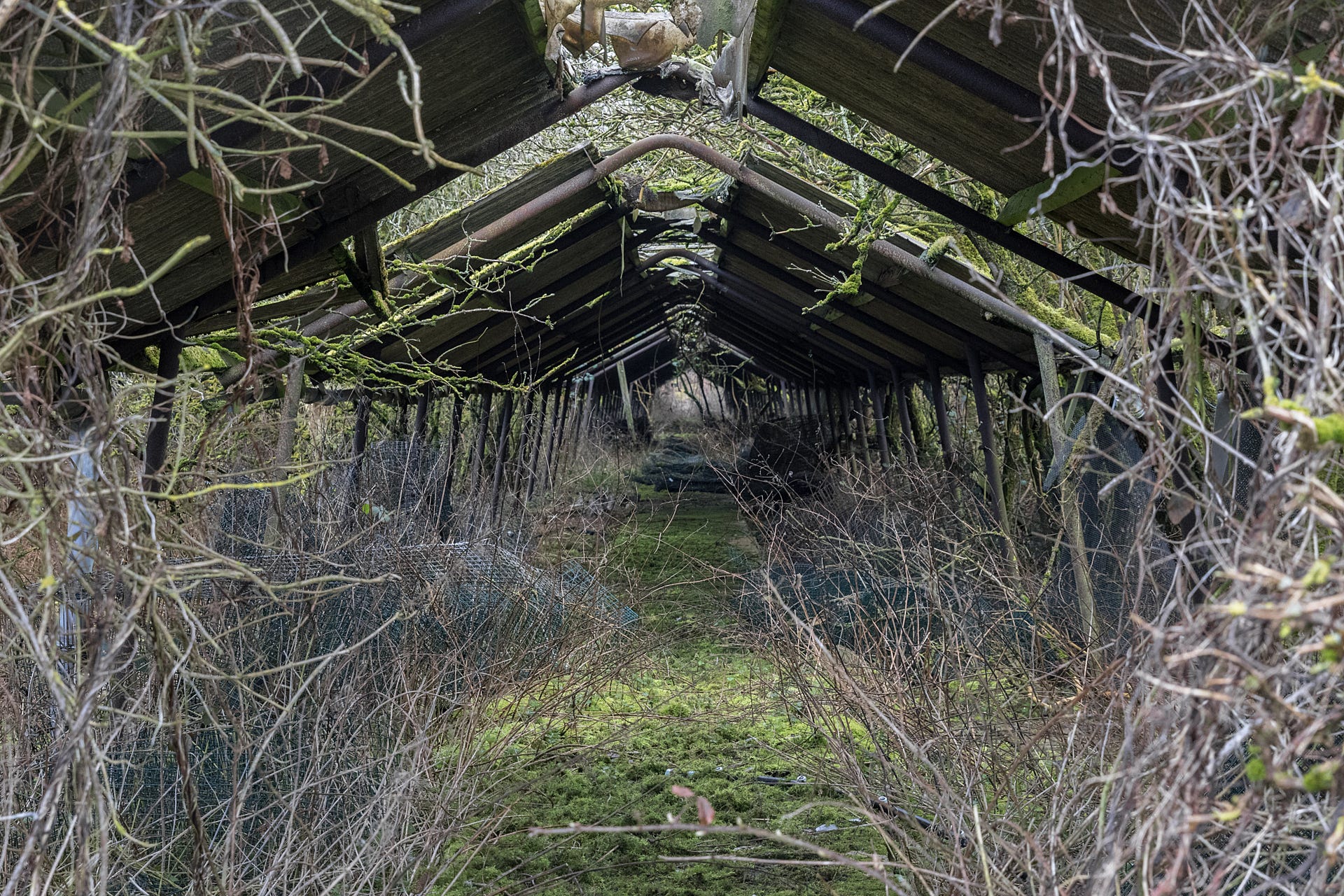
Every win in that list was called impossible. The barren battery cage was permanent. Bullfighting was culture. Dog meat was tradition, and the bear farms were an industry the state itself had built. The octopus farm was going to exist, funded, engineered, sited, a million animals a year, and the people building it called it inevitable.
The question in front of you is not “how likely we are to achieve animal liberation?” Ask the real question. Will you be part of making it happen?
The industry has spent fifty years trying to make you answer no and failed every time, because they can’t touch the only thing that could end this movement, which is you deciding it’s over. They cannot take that from you. It can only be willingly handed over. So don’t hand it over.
I think the goal of ending factory farming is being abandoned by some key actors in the movement because of source of donations. AI companies see animal agriculture as a lucrative client and together if they are mutually profitable as service provider and client neglecting then the most important things in life (animal rights, climate, environment, health, food security, workers, community). These fall by the wayside and are treated as negative externalities. What we need is a holistic approach to animal, climate and health protection and to use AI for good and not to retrench animal agriculture and make it more durable, as you warn.
Just subscribed: thank you for writing this.